How to Launch a P2P Crypto Marketplace: Escrow, Disputes, and Payment Methods
October 23, 2026
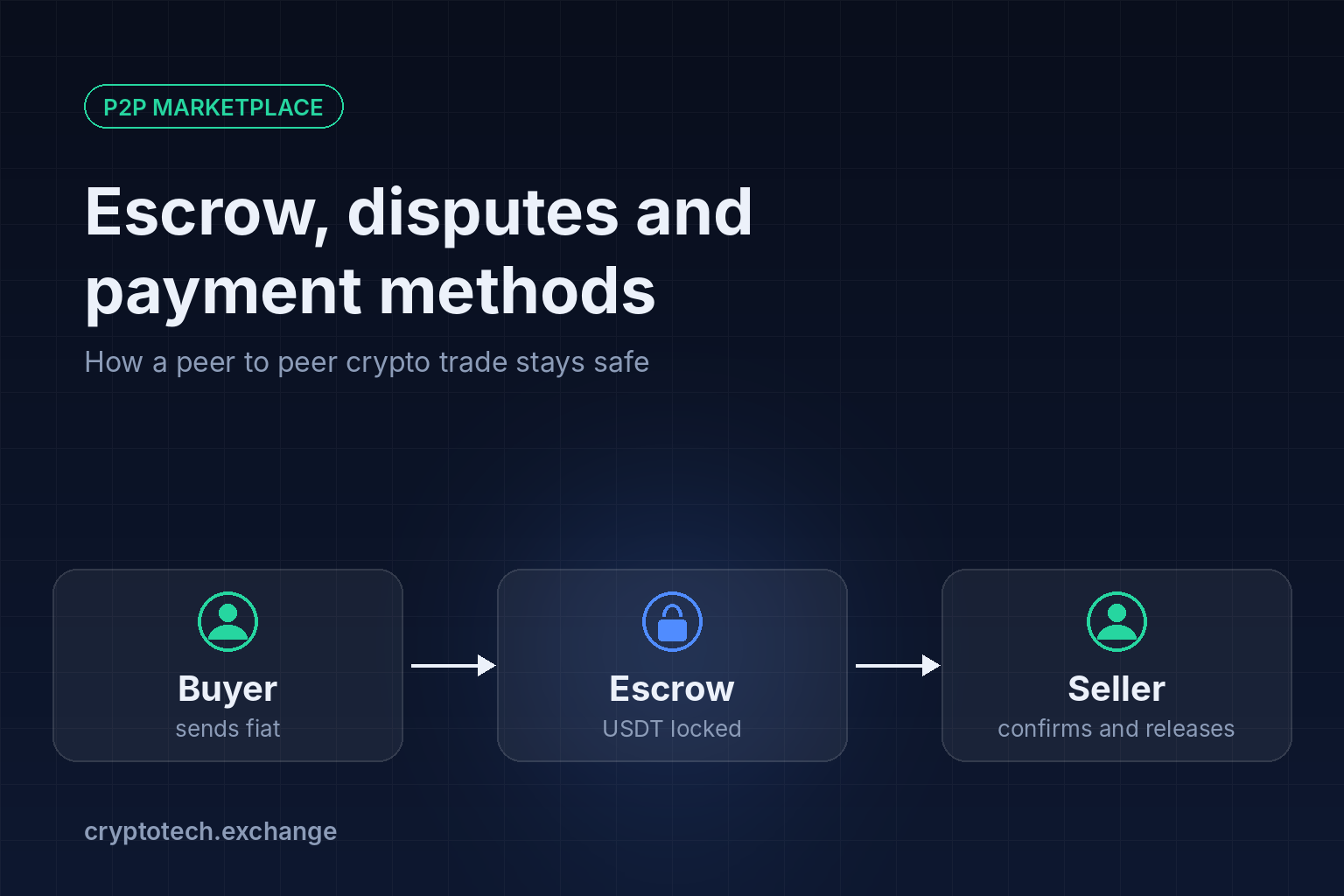
In a lot of countries, buying crypto with a bank card on a big exchange is slow, expensive, or simply blocked. People still buy crypto there. They do it peer to peer, paying a seller through a local bank transfer, a mobile wallet, or a payment app, while the platform holds the crypto in escrow until the money arrives.
That makes P2P one of the better entry points for a new exchange, especially one aimed at a specific country or region. You don’t need a fiat banking partner to process every deposit, and you can support exactly the payment methods your users already use.
It is also the part of an exchange where most of the fraud happens. This guide covers how a P2P marketplace works and where operators tend to get caught out.
How a P2P trade works
The flow is the same on almost every platform:
- A seller posts an ad: “Selling USDT at 89.5, payment by bank transfer or mobile wallet, limits 1,000 to 50,000.”
- A buyer opens a trade from that ad. The platform immediately locks the seller’s USDT in escrow.
- The buyer sends the fiat payment outside the platform, directly to the seller’s account, and clicks “I have paid.”
- The seller checks their bank or wallet. When the money is there, they release the crypto.
- The platform moves the USDT from escrow to the buyer.
The platform never touches the fiat. Its job is to hold the crypto, enforce the timer, and step in when the two sides disagree.
Escrow is the whole product
Users trust a P2P marketplace for one reason: the seller can’t take the money and keep the crypto, because the crypto is already locked. Everything else is secondary.
That means the escrow logic has to be boring and correct. Funds should lock at the moment the trade opens, not when the buyer marks it paid. A trade should never be releasable by anyone other than the seller or an admin resolving a dispute. And the balances in escrow must reconcile with your wallet system at all times. A bug here isn’t a support ticket, it’s a loss of user funds.
Timers and cancellations
Every trade needs a payment window, usually 15 to 30 minutes. If the buyer doesn’t mark the payment as sent in time, the trade cancels and the seller’s crypto unlocks.
Once the buyer has marked it paid, the trade should never cancel automatically. The seller might be slow to check their bank, but the buyer may already have sent real money. If time runs out at that stage, the trade should go to the seller for confirmation or to a dispute, never back to “cancelled.”
It also helps to limit how many trades a buyer can cancel in a day. Repeated cancellations are a common way to tie up sellers’ liquidity or probe for weak merchants.
Disputes are where the work is
Sooner or later a buyer will say they paid and the seller will say nothing arrived. Your support team has to decide who is right, and the decision moves real money.
Start with chat inside the trade, saved permanently, with file uploads for receipts. Disputes are much easier to settle when every message is on record. Tell users up front what counts as proof of payment. A screenshot on its own is weak evidence because it’s easy to fake.
Your moderators also need one screen that shows the trade history, both users’ past disputes, and their verification levels. And set response times you can actually meet. A user whose money is stuck for three days will tell everyone they know.
The fraud you should plan for
P2P fraud follows a few well-known patterns. Building against them from the start is much cheaper than cleaning up later.
Payment reversals. Some payment methods can be reversed after the fact, like card payments and certain payment apps. A buyer pays, receives the crypto, then files a chargeback with their bank. The seller loses both. Many platforms simply don’t allow reversible payment methods, or flag them clearly as high risk.
Third-party payments. The money arrives, but from an account in someone else’s name. This is often a sign of stolen accounts or money laundering. Your rules should require that the payer’s name matches the verified name on the platform, and sellers should be told not to release when it doesn’t.
Triangulation scams. A fraudster sells a real product to a victim on a classifieds site, then gives the victim the seller’s bank details from a P2P trade. The victim pays the P2P seller, the fraudster gets the crypto, and the victim later reports the transfer as fraud. The seller’s bank account ends up frozen. Name matching and payment reference rules make this much harder.
Fake payment proof. Edited screenshots and fake bank notifications. The fix is a simple rule: sellers release only after checking their own banking app, never from a screenshot.
Merchants and reputation
Most volume on a healthy P2P marketplace comes from a small group of professional traders, usually called merchants. They post ads all day, keep prices competitive, and respond fast. Without them the order list is empty, much like an empty order book on the spot side.
A merchant program gives them a reason to stay: lower fees, a verified badge, higher limits, and priority in the ad list. In return, ask for stronger verification, a security deposit, or a minimum completion rate.
For everyone else, a public reputation profile does a lot of the work. Number of completed trades, completion rate, average release time, and account age tell a buyer most of what they need to know.
Fees and revenue
P2P revenue usually comes from a small fee on each completed trade, charged to the maker, the taker, or both. Some platforms charge merchants a fixed monthly fee instead. Keep fees low at launch. P2P users compare platforms closely, and a marketplace with no ads makes no money at any fee level.
Compliance still applies
Running the escrow makes you a party to every trade, so in most jurisdictions a P2P marketplace is treated as a virtual asset service provider just like a spot exchange. That means KYC for users, transaction monitoring, and limits tied to verification level. Talk to a local lawyer before you launch, especially if you plan to serve users in more than one country.
How this works in MyCrypto
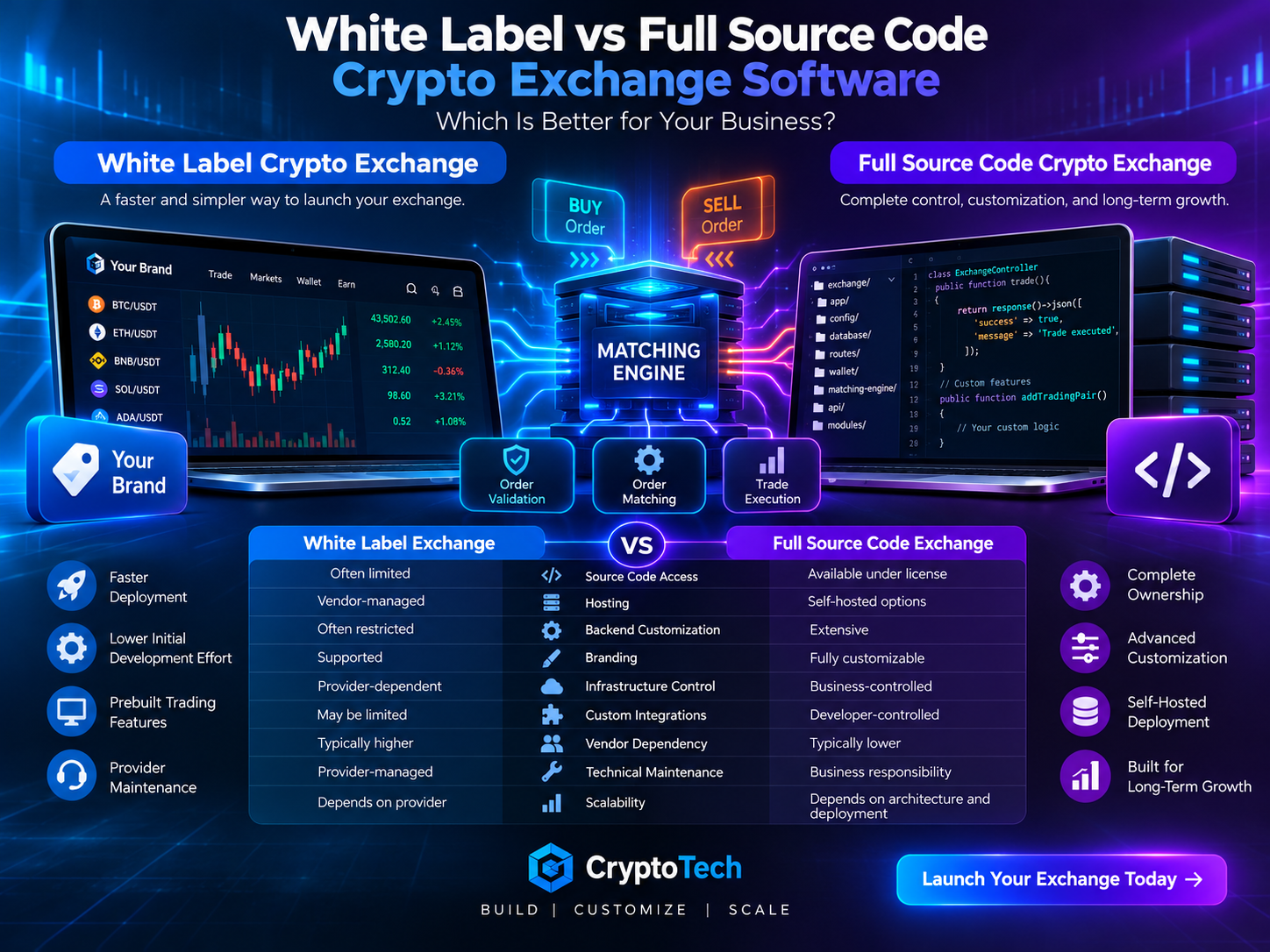
The P2P module in MyCrypto exchange software supports merchant offers, custom payment methods, trade limits, escrow workflows, dispute management, and configurable fees. It runs on the same wallet system and admin panel as the spot exchange, so you don’t have to maintain two separate platforms.
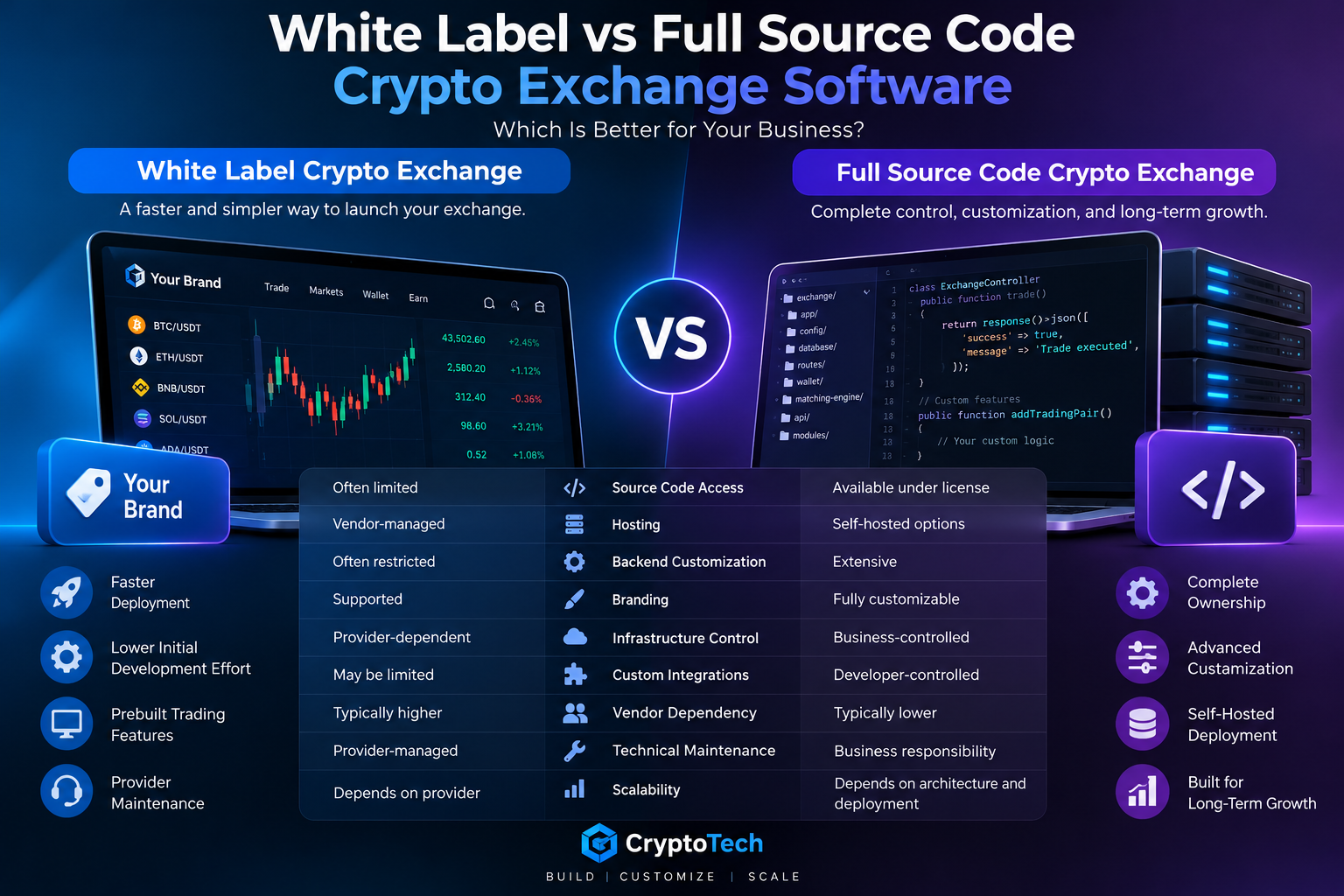
Because you receive the full source code, you can add the payment methods used in your market, change timer and cancellation rules, and build extra fraud checks that fit your region. The P2P module is included in the Enterprise package, which also comes with the Sumsub AML API integration.
FAQ
Does a P2P platform need a fiat banking partner?
Not for the trades themselves, since the fiat moves directly between users. You may still need a bank account for your own company and for collecting fees, and some jurisdictions require more.
Which stablecoin should a P2P marketplace start with?
Start with whatever your target users already hold and ask for. In many markets that is USDT, often on a network with low transfer fees. Check what local traders use before you decide.
Can I run P2P and a spot exchange together?
Yes, and it often works well. Users buy stablecoins through P2P with local currency, then trade them on the spot market. One wallet and one account cover both.
See the P2P flow for yourself on the MyCrypto live demo, or compare what each package includes on the pricing page.